Living in a studio apartment comes with a unique charm, but it also presents a familiar design dilemma: how do you fit your life into a single room without it feeling like a storage unit?
When every square inch is on display, standard decluttering often falls short. Many methods tell you to hide everything away, leading to a cold, sterile minimalism. But we believe living smaller shouldn’t mean compromising on your personal style or values.
Micro-living simply calls for a smarter, more mindful approach. It’s about creating a canvas where design meets functionality, allowing your favorite pieces to breathe. Here are 5 clever, eco-friendly ways to declutter your studio while keeping your design aesthetic completely intact.
1. The “Vertical Canvas” Rule: Look Up
When floor space is limited, look upward. Crowding your floors with low tables and baskets instantly shrinks a room. Instead, treat your walls as a vertical canvas to create an illusion of height and airiness.
- Floating Bamboo Shelves: Swap bulky bookcases for wall-mounted bamboo shelves. They add warm, natural textures without taking up an inch of floor space.
- The Aesthetic Pegboard: Perfect for kitchens or living areas. A wooden pegboard keeps your countertops clear while turning everyday items into a modular wall display.
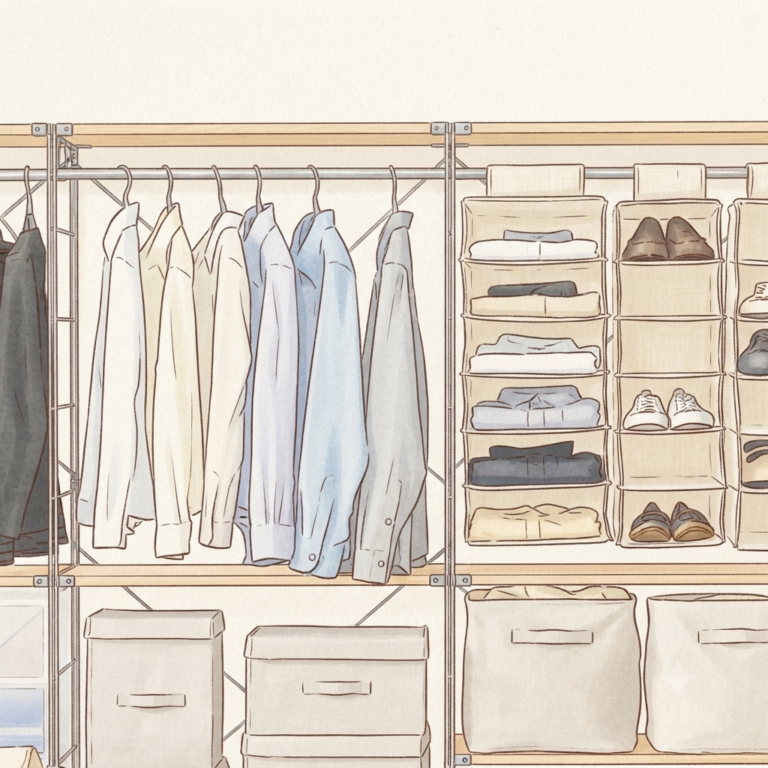
- Organic Cotton Organizers: Hang minimalist fabric pockets in empty corners to mindfully tuck away smaller essentials.
2. Hidden Storage Underneath: Out of Sight
The secret to a peaceful studio is hiding the visual clutter. When items aren’t in use, they should disappear. Utilize the forgotten spaces beneath your bed or sofa to keep your main living area open and breathable.
- Rattan Storage Baskets: Instead of plastic bins, opt for natural rattan or seagrass baskets with lids. They slide easily under low furniture while adding an earthy, artisan touch.
- Linen Vacuum Bags: For off-season clothing and extra bedding, use vacuum seal bags tucked inside minimalist linen boxes. It reduces volume by 70% and keeps textiles fresh.
- Under-Sofa Trays: Low-profile wooden rolling trays are perfect for slim gaps. They keep daily essentials like laptops or books within arm’s reach but completely out of sight.
3. The “One In, One Out” System: Mindful Curating
Clutter happens when items accumulate faster than they leave. In a micro-home, space is a premium currency. Adopting a strict “one in, one out” rule ensures your apartment maintains its breathing room without growing crowded.
- Conscious Wardrobe: Before buying a new linen shirt or winter coat, commit to donating, reselling, or recycling an old one. It keeps your closet organized and curated.
- The Decor Swap: Love changing up your space? If you buy a new ceramic vase, gift an older decor piece to a friend. This prevents surfaces from becoming overwhelmed.
- Digital Over Material: Whenever possible, choose digital versions for books and documents. For physical books you love, keep a small, dedicated shelf—once it’s full, one must be passed on before a new one arrives.
4. The “Floating Furniture” Illusion: Create Breathing Room
The more floor space you can see, the larger your studio apartment will feel. Bulky, boxy furniture that sits flat on the ground blocks light and makes space feel heavy. Opting for “floating” or legged pieces creates an instant optical illusion of openness.
- Legged Sofas & Bed Frames: Choose a sofa or bed with slender wooden or metal legs. Raising the furniture just a few inches off the ground allows light to pass underneath, making the entire room feel lighter and less crowded.
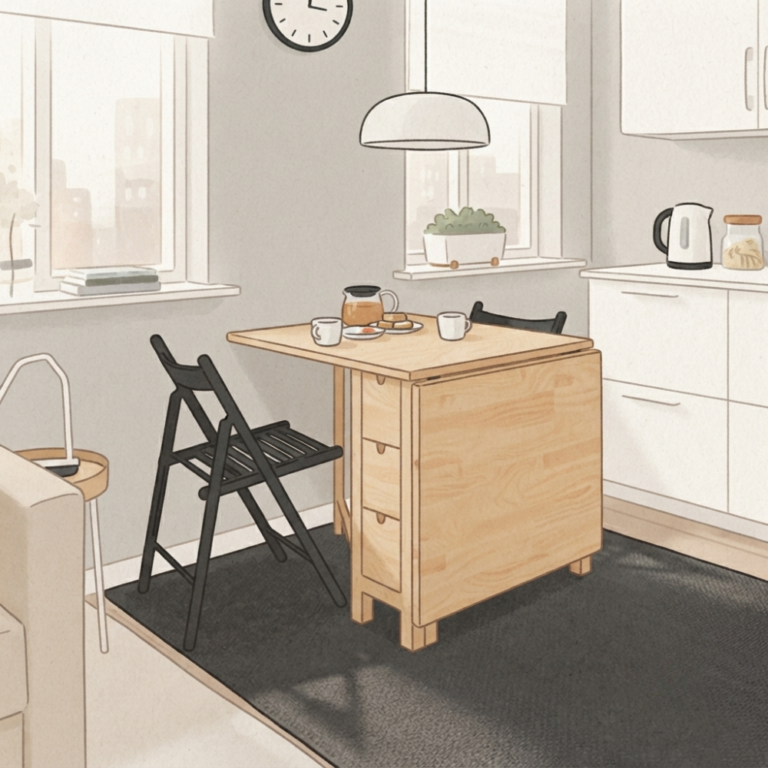
- Wall-Mounted Desks: A floating drop-leaf desk can be mounted directly to the wall. It provides a dedicated workspace when you need it, and folds completely flat against the wall when you don’t.
- Clear Acrylic Accents: Consider a transparent ghost chair or a glass-top coffee table. These pieces fulfill their function while remaining visually weightless, keeping your sightlines completely clear.
5. The “Zoning” Trick: Define Your Spaces
In a single-room apartment, without walls, boundaries can blur, making the space feel chaotic. “Zoning” is the art of using visual cues to separate your sleeping, working, and living areas, giving everything a dedicated home.
- The Rug Boundary: Place a distinct, eco-friendly jute or wool rug under your bed or sofa. This instantly defines that specific zone without the need for physical dividers.
- Open Bookshelves as Dividers: Use a low, open-backed shelving unit to separate your bed from the living room. It provides storage while letting natural light pass through both zones.
- Lighting Cues: Use different lighting for different moods. A bright task light for your workspace and a warm, dimmable floor lamp for your relaxation zone will mentally separate the spaces.
Conclusion
Decluttering a studio apartment isn’t about stripping away the items that tell your story; it’s about choosing what to highlight. By looking upward, embracing hidden storage, and creating mindful boundaries, you can transform your tiny home into a spacious, stylish sanctuary.
Start with just one corner today, and let your small space breathe.